National Arbor Week is a great opportunity to mark the beginning of spring by planting a tree.

Arbor Week is named after the Latin word for tree, ‘arbor’, and it began as Arbor Day over 150 years ago in the United States of America. It’s a day where trees and the environment are celebrated with the planting of trees by schools, businesses, governments, communities and the public. It only caught on in South Africa in the early 1980’s, and in 1999 the South African government decided that trees deserved more – seven times more, in fact – and expanded Arbor Day into Arbor Week. It’s not just about planting trees, but also about education around the importance of trees from an environmental, social and economic point of view.

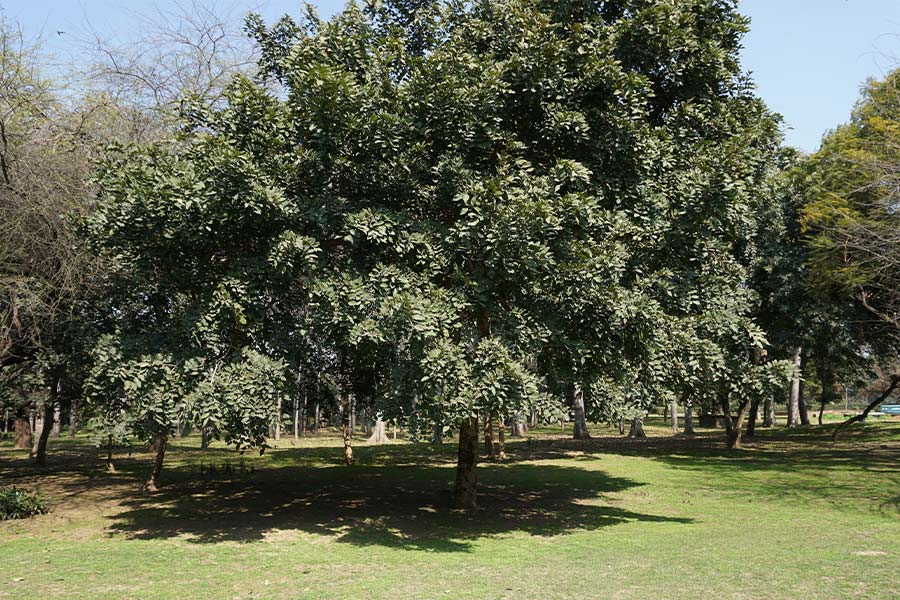
Anyone familiar with the South African coastline will know and love the white milkwood, which grows in dune forests and coastal woodlands and is perfect for coastal gardens. It is also found inland, so don’t think you can’t plant one just because you don’t live near the beach! It will reach up to 10-15 m in height, with a strong, gnarled trunk and beautiful glossy green leaves. Small white flowers appear in spring and autumn, and these are followed by purple berries that wildlife love.
The red milkwood isn’t actually related to the white milkwood, but it can also be found along our coastline from the Eastern Cape up to Mozambique. It also makes a lovely specimen tree for coastal gardens and will even grow where salt spray reaches. Like the white milkwood, it grows to 15m tall, but it has bluish flowers that turn into red berries.
Both milkwoods are protected in South Africa and may not be cut down or damaged.
The tamboti is an iconic bushveld tree that grows to 18 m in height, with a lovely round crown of mature green leaves and red young leaves. The fruit is well known and easy to identify, having three lobes and exploding open on hot days to disperse the seeds. The seeds can also be infested with moth larvae, which can make the seeds ‘jump’. This is a beautiful garden tree for large gardens and is frost resistant.
All sorts of animals and birds eat the fruit and leaves, but people should be aware that the wood produces a toxic smoke when burned.
Builders garden centres stock an extensive range of plants, including a variety of indigenous trees in 20-litre bags. Do your bit for the environment this year and plant a tree. As they say, “The best time to plant a tree is 20 years ago. The second-best time is now.”

Browse 1000’s of products available to you. Select your country to Shop Online.